
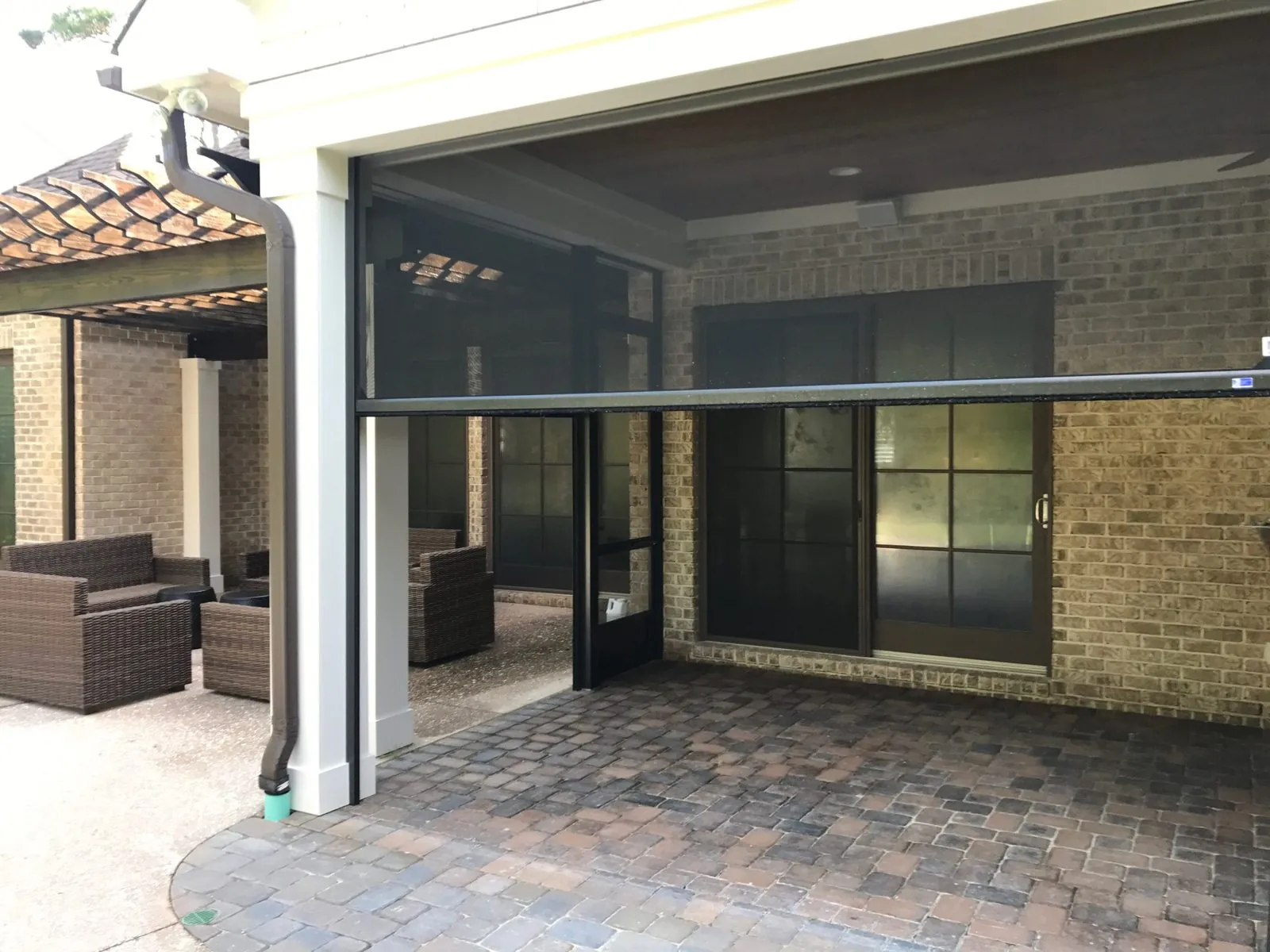
You bought the townhome for the walkability. Maybe it is near Avalon in Alpharetta, maybe Buckhead, Brookhaven, Smyrna, Sandy Springs, or West Midtown. The patio was a bonus. Then you sat down out there with a coffee, looked up, and made eye contact with a neighbor doing the exact same thing twelve feet away.
So now the patio holds a grill and two chairs nobody sits in.
You are not being antisocial. You are being normal.
The numbers on being watched
A 2026 survey of 1,000 Americans with outdoor space at home, run by DeerBusters, found:
- 87% would feel exposed without some kind of barrier between their outdoor space and the neighbors
- 44% worry at least sometimes that a neighbor is watching them outside
- Only 14% are comfortable doing everyday things outside in plain view
- 54% say privacy is essential just to relax outdoors
- 49% say they spend more time outside specifically because their space feels private
A separate Top Rail Fence survey found that 65% of Americans admit to hiding from their neighbors, and only 19% say privacy is not a concern at all.
Here is the part that matters: those are mostly people with full backyards. A townhome patio has the neighbor's patio on one side, second-story windows above, and a sidewalk or alley out front. If 87% of people with a yard feel exposed, the townhome number is not going to be lower.
The last stat is the useful one. Privacy is what turns a patio you own into a patio you use.
First, do the sightline test
Most privacy money gets wasted because people block the wrong direction. Before you buy anything, sit in the chair you actually use, at the time of day you would actually be out there, and figure out where the eyes are coming from:
- Level: the neighbor's patio, or the shared walkway. Eye height, close range.
- Above: second and third story windows and balconies looking down at you.
- Street side: sidewalk, alley, parking, or the road.
Write down which ones bother you. Every option below is good at one or two of these and useless at the others.
Second, read the HOA rules for ten minutes
Nearly every metro Atlanta townhome community has covenants and an architectural review process. The pattern in most of them:
- Usually fine without asking: furniture, potted plants, umbrellas, anything freestanding that you could carry inside
- Usually needs approval: anything attached to the building, anything permanent, anything visible from the street
- Usually not allowed: taller fences, solid walls, and changes to the shared look of the building
Yours may differ, so check before you drill into anything. The options below are sorted with that in mind.
Why screens are the easiest "yes" on the approval list
Fences and walls get denied because they permanently change how the building looks. Screens are a different conversation, for four reasons:
- They sit inside the existing opening. Nothing extends past the porch or garage frame, so the footprint and roofline do not change.
- A retractable screen is invisible most of the time. When it is up, the building looks exactly as it did before.
- Housings and tracks are color-matched to your existing trim, so the hardware blends in.
- Screened porches are a request review boards already know. You are not asking them to invent a policy.
We provide the drawings, specs, and color information your application needs. What we will not do is tell you approval is guaranteed, because no honest contractor can. Get the approval letter first, then install. It usually takes one board meeting, and it protects you when you sell.
The nine options, honestly
1. Rearrange the furniture (free)
Turn the seating so your back is to the worst sightline and you face your own wall or your own plants. A high-backed bench or outdoor sectional is a fence you are allowed to own. It sounds too simple, and it fixes about a third of the problem in ten minutes.
Blocks: level. HOA: nothing to approve. Downside: they can still see the back of your head.
2. Tall planters with evergreens
The most recommended fix for a reason. The planter gives you two feet of height before the plant even starts. For Atlanta's climate, look at Sky Pencil holly, upright junipers, or tea olive, which stay narrow and green all year. Put planters on rolling bases if your patio is small.
If you want bamboo, buy a clumping variety and keep it in the pot. Running bamboo in the ground will be in your neighbor's yard within two summers and you will be the villain of the next HOA meeting.
The catch nobody mentions: plants work by being a wall, and a wall works in both directions. A hedge thick enough to stop the neighbor from seeing you is thick enough to stop you from seeing anything. On a small patio, a row of evergreens also eats a foot or two of floor space and shades the one sunny corner you had. Plants are the right call for one bad sightline. Wrapping the whole patio in them trades a fishbowl for a box.
Blocks: level, some street. HOA: almost always fine. Downside: blocks your view as much as theirs, takes a season or two to fill in, and pots need watering in July.
3. A trellis with an evergreen vine
Narrower than planters and faster than shrubs. Carolina jessamine is native to Georgia, evergreen, and covers a trellis quickly. Star jasmine does the same and smells better. Set the trellis in a planter box so it is freestanding, which keeps it on the right side of most HOA rules.
Blocks: one specific level sightline. HOA: fine if freestanding. Downside: a targeted fix, not a whole-patio fix, and like any plant screen it blocks your view out too.
4. Outdoor curtains
Best look for the money on a covered patio. Hang them on a tension rod or cable between the posts and you have not attached anything permanent.
Blocks: level and street. HOA: mixed, since fabric visible from the street gets flagged in some communities. Downside: they blow around, they mildew in Georgia humidity, and in pollen season they turn yellow and stay that way.
5. Freestanding privacy panels
Slatted wood, laser-cut metal, or composite panels on weighted bases. They look intentional and you can take them with you when you move.
Blocks: level. HOA: usually fine when not attached. Downside: a panel tall enough to work is a sail. Weight the base properly or the first summer thunderstorm will relocate it.
6. An umbrella or shade sail for the view from above
This is the only cheap answer to second-story windows. A cantilever umbrella or a sail angled toward the offending window breaks the line of sight from above, which nothing else on this list does.
Blocks: above. HOA: umbrellas are fine; an attached sail usually needs approval. Downside: take it down before storms.
Why screens do more than the first six
Everything above blocks a view and nothing else. Solar screens are the one option on this list that changes how the whole space works:
- You see out. They cannot see in. In daylight, solar mesh looks like a dark, solid panel from the outside. From your chair it looks like the view with sunglasses on. You keep the trees, the skyline, and the light. The neighbors get nothing. That is the difference from plants, panels, and curtains, which all give you privacy by taking your view away too.
- It blocks the sun before it reaches your glass. Most townhome patios sit in front of a big sliding door, and that glass is where a lot of summer heat gets into the house. Stopping the sun outside the glass works far better than blinds on the inside, which is why exterior shading is a standard energy-saving recommendation. A cooler back room means the AC runs less.
- It turns the porch into a room that shares the house's air. Solar mesh is not bug screen. Standard insect screen is mostly holes, and air passes straight through. Solar mesh is mostly fabric, so it slows air movement way down. Open the door on a screened porch and the space borrows the cool from the house in summer and the heat in winter, and holds onto it far better than an open patio ever could. It is not a sealed, insulated room, so nobody should run the AC out there all day in August. But for dinner, a game, or a morning coffee, it feels like an extra room of the house. For the closest thing to a sealed room, clear vinyl panels hold the most.
- It works on every outdoor space a townhome has: the ground-floor patio, the second-floor porch, the covered rooftop terrace, and the garage.
- It makes the space year-round. Insect and solar mesh for spring through fall, and clear vinyl panels for winter that hold the heat from a patio heater so the porch stays in use through January.
7. Fixed solar screens on the porch
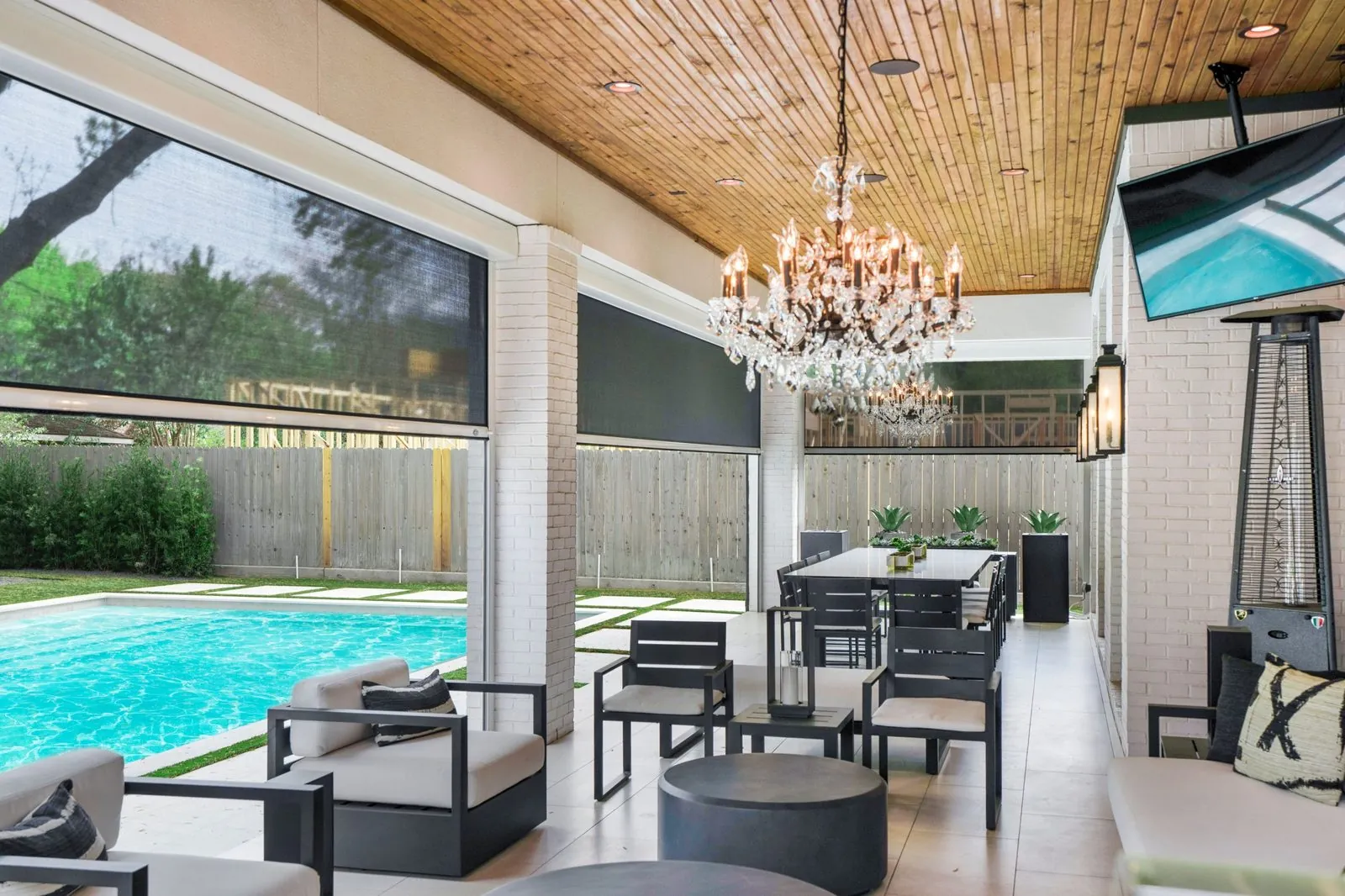
If your patio is covered, this turns it into a screened porch, with one big difference. Instead of standard insect screen, which you can see straight through, the panels use solar mesh. From outside in daylight it reads as a dark, solid surface. From inside you still see out.
You get daytime privacy, glare control, shade, and no bugs in a single move. It does not roll up, which makes it the simpler and more affordable screen route.
Blocks: level and street, all day. HOA: needs approval, but screened porches are a familiar request. Downside: it is permanent, so you give up the fully open patio on perfect days.
8. Motorized retractable screens
Same solar mesh and the same daytime privacy, but the screen rolls up into a slim housing at the touch of a button. Privacy when the neighbors are out, wide open when they are not. Because the screen disappears when retracted, the building looks unchanged, and we provide drawings and specs for the architectural review application.
On a rooftop terrace, screens mount to a pergola or covered structure. Rooftops catch more wind than anything at ground level, so this is where a retractable screen and a wind sensor earn their keep: the screens raise themselves when it gusts. Standard screens should be up any time winds pass 60 mph.
Blocks: level and street, on demand. HOA: needs approval; the vanishing profile helps. Downside: the biggest investment on this list.
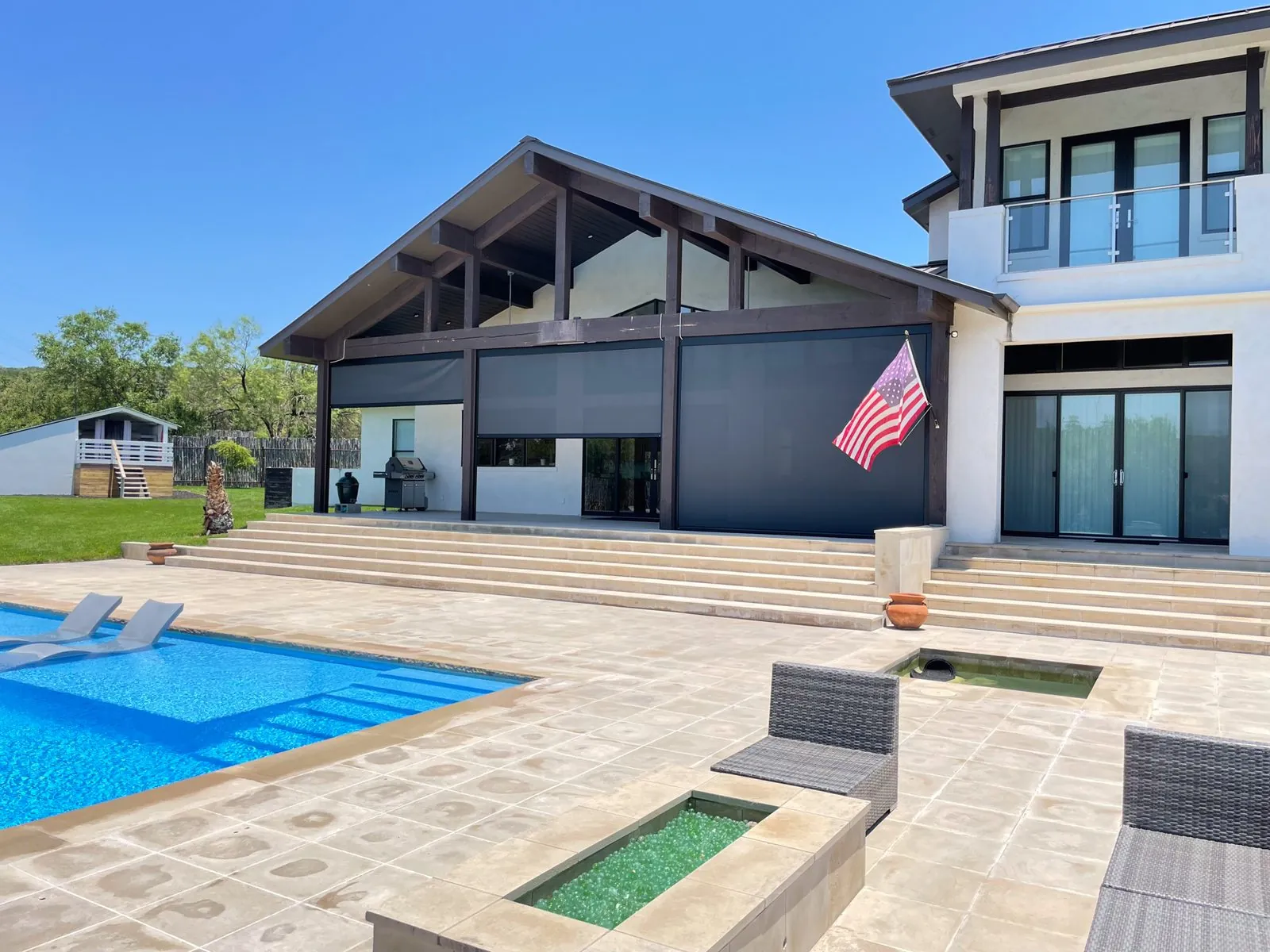
One honest note on options 7 and 8: solar mesh privacy works on light. During the day it is bright outside and you cannot be seen. At night, with your patio lights on, the effect reverses and people can see in. Keep the lighting low and warm after dark, or pair the screen with a planter on the worst sightline.
9. The one nobody thinks of: screen the garage
In most Atlanta townhomes the garage is the biggest room on the ground floor, and you cannot use it with the door open because the whole street can see in.
A motorized solar screen across the garage opening fixes that. It typically mounts just inside the opening, so the garage door works exactly as before. Door up, screen down, and you have an open-air gym, workshop, or hangout with a breeze moving through it. It is also the missing piece for a garage golf simulator: hang your impact screen on the back wall, hit away from the opening, and drop the solar screen behind you so you get airflow without an audience. Nobody walking by can see your squat form or your tool collection, the afternoon sun stays out so the space runs cooler, and the mosquitoes stay outside.
For a lot of townhome owners this ends up being the better buy than the patio, because it adds a room the house did not have.
Blocks: street, completely, in daylight. HOA: check the rules on open garage doors first. Downside: same day and night rule as above.
Does it pay you back?
Three ways, in order of how sure we are about them.
1. Use, which is guaranteed. You are already paying the mortgage, taxes, and HOA dues on that patio, rooftop, and garage. If you never sit out there, that is square footage you own and do not use. Remember the survey: 49% of people spend more time outside because their space feels private. The return starts the first evening you actually use it.
2. Energy, which is likely. Shading the big glass door from the outside takes load off the AC all summer. How much depends on which way your unit faces, and a west-facing slider is the best case.
3. Resale, which is real but not a promise. The National Association of Realtors cites HomeLight data that a screened-in porch may return as much as 75% of its cost at resale, and notes that owners are increasingly choosing motorized screens to get that same room without feeling boxed in. For a townhome the logic is even simpler. Your unit competes against nearly identical units in the same community, often at the same time. Same floor plan, same finishes, same patio. The one where the patio is a private, shaded, bug-free room, or where the garage doubles as a gym, is the one a buyer remembers. Screens stay with the house, so that advantage goes on the listing.
Nobody can honestly promise you a number, and you should be skeptical of any contractor who does. Buy it because you will use it, and treat the resale bump as a bonus. Planters, by the way, leave with you.
At a glance
| Option | Level | Above | Street | HOA friction | Works right away |
|---|---|---|---|---|---|
| Rearrange furniture | Partly | No | No | None | Yes |
| Planters with evergreens | Yes | No | Partly | Low | No |
| Trellis and vine | One angle | No | No | Low | No |
| Outdoor curtains | Yes | No | Yes | Medium | Yes |
| Freestanding panels | Yes | No | Partly | Low | Yes |
| Umbrella or shade sail | No | Yes | No | Low to medium | Yes |
| Fixed solar screens | Yes | No | Yes | Approval | Yes |
| Motorized screens | Yes | No | Yes | Approval | Yes |
| Garage screen | n/a | n/a | Yes | Approval | Yes |
What we would actually do
- Renting, or not ready to spend: options 1, 2, and 6 together. Turn the seating, add two tall planters on the worst side, and put an umbrella between you and the upstairs windows.
- Staying a few years: screens, fixed or motorized. Nothing else on this list gives you privacy, shade, and no bugs in one move. Go fixed if you want the simpler route and would keep it screened most of the time anyway. Go motorized if you want the patio wide open on perfect days, or for a rooftop or garage where the screen needs to get out of the way. Either way, add one planter on the worst sightline for evenings.
Quick answers
Can my neighbors see through a solar screen?
Not in daylight. At night with lights on inside, yes. See the note above.
Do I need HOA approval for patio screens?
In most townhome communities, yes, since screens attach to the building. We supply drawings, specs, and color information for the application. We cannot promise an approval, but a product that disappears when retracted is an easier conversation than a fence.
Will a screen make my patio dark?
Solar mesh cuts glare and heat but you still see out clearly. Most people describe it as wearing sunglasses.
Does a garage screen get in the way of the garage door?
No. The two operate independently.