
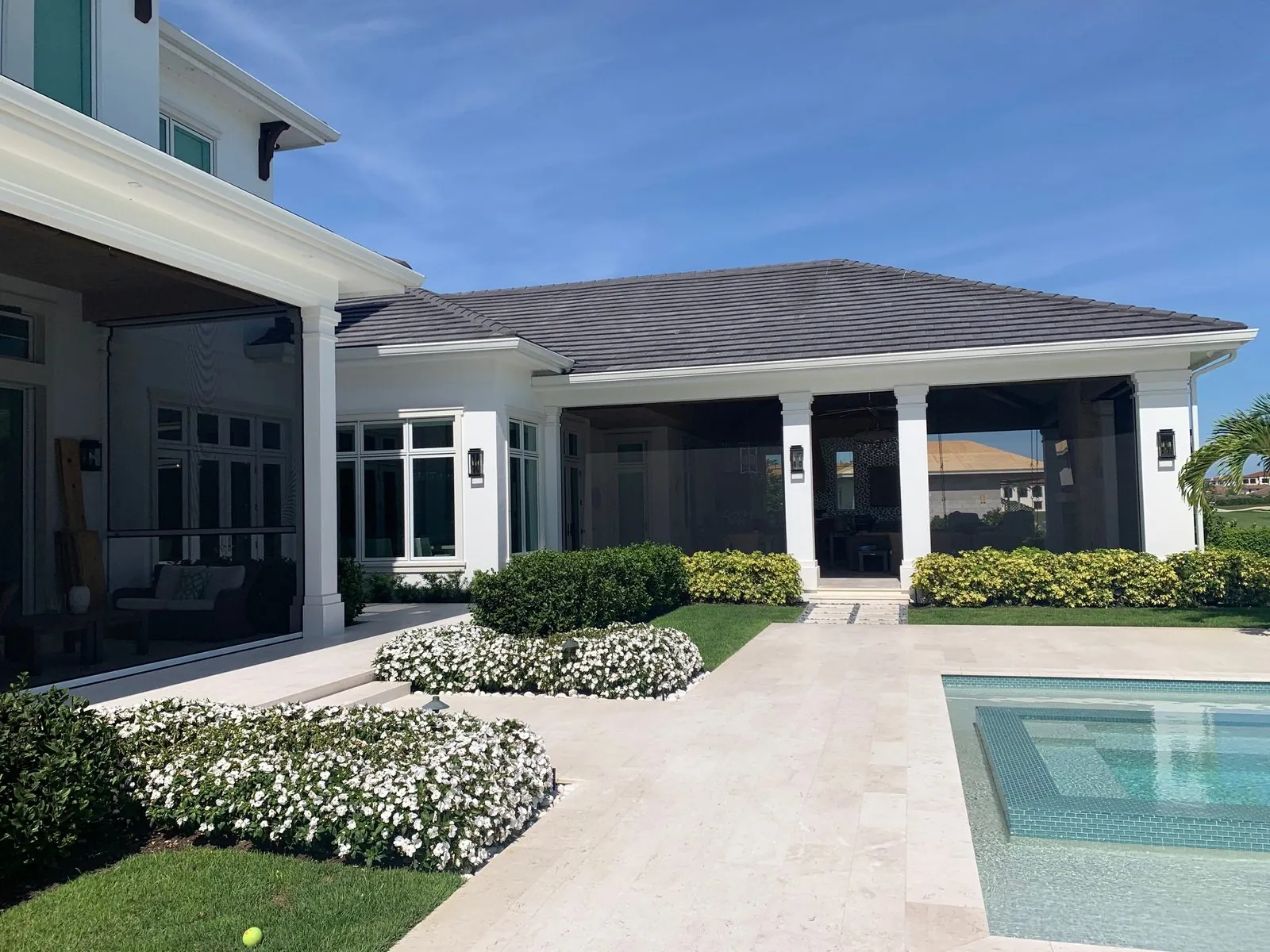
Almost every motorized retractable screen on the market holds the fabric in its side tracks one of two ways: with a zipper sewn to the edge of the mesh, or with magnets. That one decision decides how the screen behaves when a kid runs into it, when the wind gusts, and when your porch floor isn't perfectly level. It also decides how often you'll be calling for service.
MagnaTrack was designed specifically to eliminate the service calls that zipper systems generate, and Progressive Screens reports it prevents 98% of them. In an industry that had used the same zipper design for decades, that made it a disruptor. This guide walks through both designs, then compares them point by point so you know what you're actually paying for.
How zipper-track screens work
A zipper-track screen has a strip of zipper tape stitched down each side of the mesh. That tape rides inside a fixed aluminum channel. The channel is shaped so the zipper can slide up and down but can't pull out sideways. It's a simple, proven idea, and it's why most motorized screens cost what they do.
The weakness is that the zipper has to stay inside the channel at all times. Three things pull it out:
- Impact. A dog, a kid, or a chair pushed into the screen bows the mesh inward. If it bows far enough, the zipper pops out of the track.
- Wind. A strong gust does the same thing across the whole panel at once. Once one side releases, the fabric flaps and can wrap around the roller.
- An out-of-level floor. If the bottom bar can't sit flat, one side of the mesh is under more tension than the other. Over time that pulls the zipper.
When a zipper screen jumps its track, it usually can't be reseated by hand. The screen has to be fully raised and reset, and that is a service call. The zipper tape itself also wears with every cycle, the same way a jacket zipper does.
How MagnaTrack holds the screen
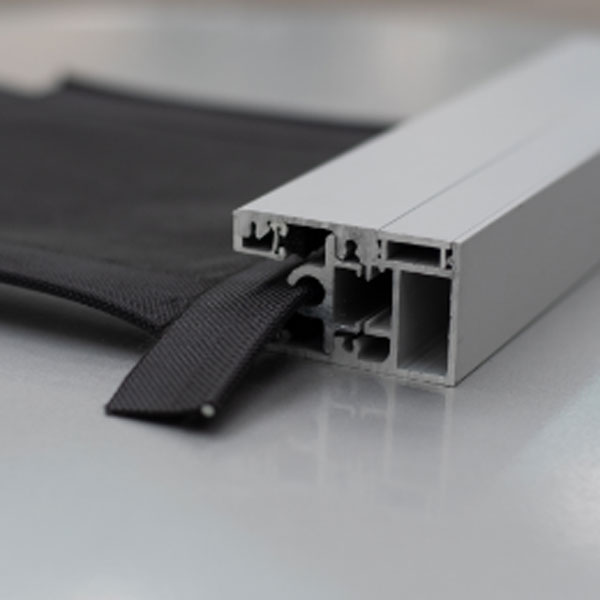
MagnaTrack (US Patent No. 11421474) replaces the zipper with a pair of neodymium magnets. One magnet sits in a low-friction interlock sewn to the edge of the mesh. The other sits in a track that floats inside the side channel rather than being fixed to it. Progressive Screens reports the magnet track has more than 10 times the pulling force of any other system on the market.
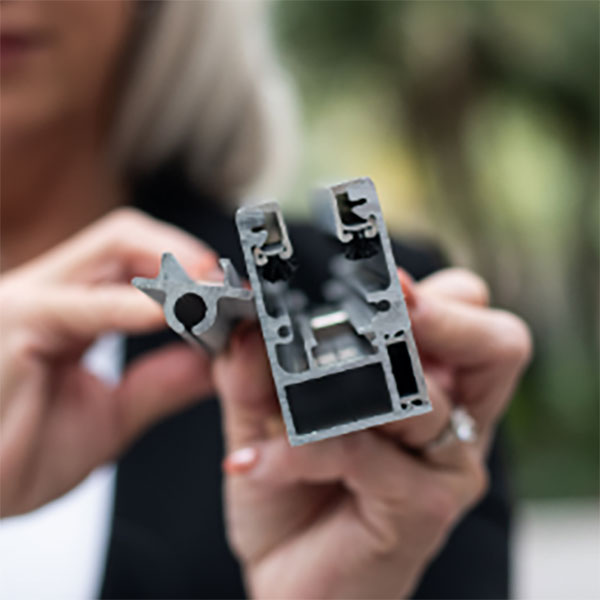
Because the track floats, the screen can move. Push on it and the magnets separate; let go and they snap back together. The manufacturer calls this Self Adjusting Technology. In practice it means:
- A dislodged screen re-seats itself. Nobody has to come out and reset it.
- The screen takes a body impact without jumping the track.
- In wind, the sidetracks adjust instead of letting the fabric bellow or pull free.
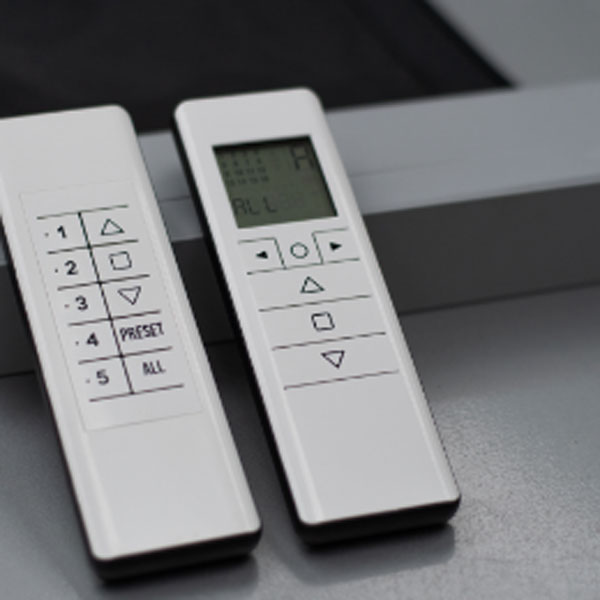
The rest of the system is built to match. The Gaposa motor has three-attempt obstacle detection, so if the bottom bar meets something on the way down it stops, reverses, and tries again rather than wrapping the fabric around the roller. The weight bar is rated the heaviest in the industry, which keeps the mesh flat and the magnets engaged.
That combination is where the number everyone quotes comes from. MagnaTrack was engineered to prevent the problems zipper screens are known for, and Progressive Screens states it eliminates 98% of the service issues inherent to fixed-track and zipper systems. Nothing else in the motorized screen industry works this way, which is why it changed the category.
Side by side
| MagnaTrack | Zipper-track screens | |
|---|---|---|
| Screen comes off the track | Self-corrects; magnets re-seat it | Needs a service tech to reset |
| Someone walks into it | Absorbs body impact | Impact can dislodge the zipper |
| Wind gusts | Rated to 75 mph; sidetracks self-adjust, no bellowing | Zipper can release and fabric can wrap |
| Porch floor out of level | Works up to 4" of bias | Not possible without shimming |
| Wear part at the edge | Magnets; no zipper to wear | Zipper tape wears with every cycle |
| Service calls | 98% fewer, per Progressive Screens | Recurring |
| Heat blocked | Over 58% of heat penetration stopped | Varies by fabric |
| Storm-rated option | Defender, built to Category 5 | None |
Figures in this table are the manufacturer's (Progressive Screens, 2025 MagnaTrack catalog).
What this means for an Atlanta porch
Three things about Atlanta make the track design matter more here than in most markets.
Older porches slope. Decks and porches on homes from the 1980s and 1990s were often built with a slight pitch for drainage, and some have settled since. A zipper screen on a floor that's an inch out of level will fight that slope every day. MagnaTrack's felt-sealed weight bar sits flat on up to 4 inches of bias, so the screen seals and the magnets stay engaged.
Spring storms are sudden. Atlanta gets pop-up thunderstorms with strong gusts from March through August. A zipper screen that releases in a gust can wrap the roller, and that's a service visit in the middle of the season you bought the screen for. MagnaTrack's sidetracks self-adjust, and the motor's obstacle detection stops a wrap before it happens.
Porches get used. Kids, dogs, and a chair pushed back too far are all normal porch life. A screen that pops off its track every time someone leans on it is a screen you stop lowering. One that snaps back on its own is one you leave down.
None of this makes MagnaTrack the cheapest option. It makes it the one you aren't calling about.